Screw Out 3D: Nut Sort Jam
- 4.7
- Rating
- 1.00M
- Installs
- Free
- Price

 Analysis by App-foxy
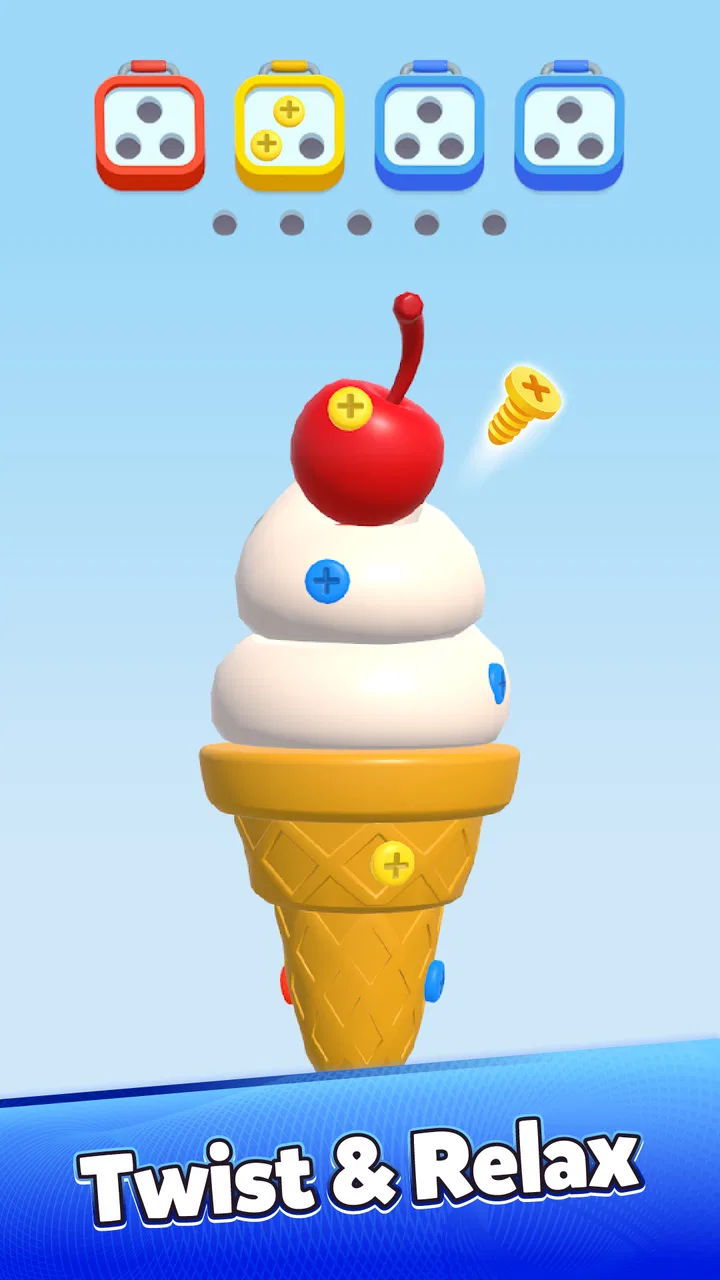
I found Screw Out 3D: Nut Sort Jam most enjoyable when I treated it as a short concentration break rather than a game I needed to rush through. It is a free puzzle game from Unico Studio built around arranging and removing pieces in a three-dimensional space. The basic idea is easy to understand, but the satisfying part comes from seeing a messy board gradually become orderly while I decide which move will keep the puzzle open instead of blocking the next one.
That balance gives it a clear identity among mobile puzzle games. It is more tactile than a standard tile-matching game, less frantic than a timed arcade puzzler, and more immediately accessible than a traditional logic game with a long explanation. I would recommend it to anyone who likes sorting, spatial planning, and small victories that arrive one move at a time. I would be more cautious with it if you want a deep story, a competitive multiplayer experience, or a puzzle game that constantly introduces radically different rules.
What makes the puzzle loop work
The appeal begins with the physical presentation. Instead of looking at a flat grid and simply matching colors or symbols, I have to read the arrangement as a layered object. Nuts, screws, and surrounding pieces can hide useful options, so the first challenge is often observation rather than action. I found myself rotating my attention around the board mentally, checking which piece was genuinely available and which one only appeared accessible because of the camera angle.
You May Also Like

 Blood Strike: 2.5 Anniversary
Blood Strike’s Loadouts Turn Every Drop Into a Tactical Gamble
A close look at Blood Strike’s custom loadouts: how fast access to signature weapons reshapes its battle royale rhythm, rewards preparation, and narrows the gap between fights.

 Pandora - Music & Podcasts
Pandora’s Music Is Easy to Start, but Harder to Recover
Pandora’s strength is its low-effort path from a seed to a station. Its weak spot is how much confidence it asks you to place in connection, setup, and quiet recovery.

 8 Ball Pool
 Is Built on Rivalries, Rematches, and Routine
A close look at the rivalries, rematches, shared routines, and unanswered safety questions that turn a quick pool match into a persistent mobile community.

 Samsung Music
’s Quiet Strength Is Playing What You Already Own
Its reach comes less from spectacle than from dependable access to a personal library. That simplicity is both the app’s strongest retention engine and its ceiling.

 AccuWeather: Weather Radar
AccuWeather Review: A Quick, Clear Forecast for Everyday Decisions
For everyday plans, the best forecast is the one you can understand quickly. AccuWeather makes rain timing, radar, and local conditions easy to act on, with a few trade-offs.

 Hill Climb Racing
Why Hill Climb Racing Still Turns Crashes Into One More Run
A tiny car, a bumpy hill and one more upgrade: Hill Climb Racing keeps resurfacing because its simple chaos makes every near-miss feel personal.
More From Our News Desk



That small change in perspective matters. In many sorting games, the correct move is obvious once the colors are visible. Here, the order of removal can be just as important as the destination. Taking an easy piece may expose a better route, but it can also consume space or leave a later piece trapped behind an awkward arrangement. The game therefore rewards a pause before tapping, which is a good fit for players who enjoy planning without the pressure of a complicated ruleset.
The most satisfying moments come from creating a clean sequence. I might begin by clearing one obstruction, use the newly opened area to reposition my attention, and then follow a chain of moves that was not visible at the start. The board feels less like a list of isolated tasks and more like a small mechanical problem. The real skill is preserving future options, not simply making the first legal move.
This is also why the game works well in short sessions. I can play a level while waiting for an appointment or winding down before bed, and the central action is understandable almost immediately. There is no need to remember a complicated narrative or rebuild a large strategy between sessions. The visual state of the puzzle tells me where I left off, and the objective remains focused.
Reading the board before touching it
My most useful habit was to spend a few seconds identifying bottlenecks. A narrow area with several pieces behind it deserves more attention than a loose piece sitting in the open. If I clear the wrong object first, I may make the board look tidier while actually reducing my choices. Looking for the part of the structure that controls access is more reliable than chasing the most obvious color group.
I also learned not to judge a move only by its immediate reward. Removing a piece can feel productive, but the better move is sometimes the one that leaves a larger working area for later. This makes the experience more thoughtful than its cheerful, casual presentation suggests. It is still approachable, yet it gives careful players a reason to improve rather than simply repeat the same taps.
Another practical tip is to use the camera and perspective as part of the puzzle instead of treating them as decoration. When a piece looks blocked, I take a moment to inspect the surrounding arrangement from another visual angle. That prevents the common mistake of assuming that a move is impossible before properly reading the 3D layout. The game’s central challenge depends on this kind of visual checking, so playing too quickly can make a fair puzzle feel confusing.
A calm game with a surprisingly deliberate rhythm
The store summary describes a relaxing 3D puzzle experience, and that description matches my overall impression, although relaxation depends on how I play. The game is calm when I approach each board as a small problem to solve. It becomes more frustrating when I tap impulsively and discover that I have closed off the route I needed. That distinction is important: the game does not remove the possibility of mistakes, but it gives me enough time to think about them.
For an everyday example, I could see myself opening it during a short train ride with no intention of completing a long campaign. I would solve a board, stop when my attention drifted, and return later without feeling that I had abandoned a larger commitment. That makes it a better companion for fragmented free time than puzzle games that require long uninterrupted sessions or demand constant reaction speed.
It is also suitable for players who prefer visual logic to arithmetic or wordplay. Someone who enjoys organizing a cluttered drawer, fitting objects into a suitcase, or untangling a compact physical puzzle may understand the attraction quickly. The satisfaction is not mainly about memorizing patterns. It comes from making a crowded structure readable and then dismantling it in a sensible order.
Where it compares well with familiar alternatives
Compared with match-three games, this one gives me more control over the sequence of actions. Match-three puzzles often ask me to create combinations within a grid, while this game focuses on access, placement, and spatial visibility. The reward is less about producing a spectacular chain and more about discovering why one careful move opens several others.
Compared with classic sliding-block puzzles, it feels friendlier and less rigid. I am not always searching for one exact arrangement through a long series of maneuvers. The object-based presentation makes the task easier to grasp, and the sorting theme gives each board a clear visual purpose. On the other hand, players who love highly formal puzzles may find it less intellectually demanding than a difficult sliding-block challenge.
It also differs from hidden-object games. The important pieces are not merely items I need to find; I need to understand their relationship with the surrounding structure. Spotting something is only the beginning. The more meaningful question is whether removing it now will help or hurt the remaining board. That extra layer gives the game more replayable thought than a simple search task.
Against fast arcade puzzlers, its advantage is control. I can usually focus on the arrangement instead of racing a clock or reacting to constant movement. The trade-off is that it may feel too measured for players who want immediate pressure and a strong adrenaline loop. This is a game for deliberate fingers, not frantic ones.
The friction that keeps it from being perfect
The same simplicity that makes the game accessible can limit its long-term appeal. Its central sorting-and-removal idea is clear, but players who need frequent mechanical surprises may eventually want more variety than the core loop provides. I enjoyed refining my approach, yet I can also imagine reaching a point where the presentation changes more than the underlying decision-making.
Three-dimensional boards can create another source of friction: visual ambiguity. When several pieces overlap, the difference between “not available yet” and “available from this angle” may require careful inspection. That is part of the intended challenge, but it can occasionally feel like I am negotiating the view rather than solving the puzzle. Anyone with limited patience for rotating or visually parsing layered objects should try a few boards before committing to regular play.
The free-to-play structure deserves attention as well. The game costs nothing to start, while optional in-app purchases range from $0.99 to $99.99 per item. That broad range means the experience may suit a player who wants a free casual game, but anyone sensitive to purchase prompts should approach thoughtfully. I would avoid buying anything impulsively simply because a difficult board interrupted my rhythm. The strongest reason to play is the puzzle itself, not the idea of spending to bypass a moment of resistance.
Another limitation is that this is not the right substitute for a rich, content-heavy puzzle adventure. I would choose a narrative game if I wanted characters, exploration, or a story that develops over many sessions. I would choose a competitive title if I wanted rankings or direct matches. The focused design is a strength for quick relaxation, but it naturally leaves less room for those broader experiences.
Who should download it
I think it is a particularly good match for casual puzzle players who enjoy sorting and want something more spatial than a flat color grid. It should also appeal to people who like games that can be paused at almost any point and resumed without a major mental reset. The age rating is Everyone, which fits its approachable presentation and family-friendly puzzle concept.
It may work well for a parent looking for a simple game to share with a child, provided the child is comfortable interpreting layered 3D objects. The rules are easier to explain than those of many strategy games, and solving a board together can encourage discussion about consequences: which piece should come out first, what space will be opened, and whether a tempting move is actually safe.
It is less suitable for players who dislike repetition, need a strong story, or prefer puzzles based on language, numbers, or deduction grids. I would also skip it if my main goal were a demanding expert-level challenge with a large collection of fundamentally different systems. Its pleasure comes from polishing one central idea rather than constantly replacing it.
Before installing, I would ask myself what kind of break I want. If I want a quiet activity that rewards observation and gives me a visible sense of progress, it is a sensible choice. If I want to compete, socialize, or become absorbed in a long fictional world, another category would serve me better.
Device details and everyday practicality
The game runs on Android devices using version 6.0 or later, so it is not restricted to only the newest phones. Its current version is 2.0, and the project has already passed one million installs, with an average rating of 4.7 from around seventy-three thousand ratings. Those figures suggest that the straightforward 3D sorting concept has found a broad audience, though popularity alone does not remove the need to decide whether the pace suits you.
In practical use, I would keep the game for moments when I want a self-contained activity rather than something that needs preparation. The best workflow is to begin by scanning the whole board, identify the most restrictive area, and then make moves that preserve room for the next stage. If I start tapping just because a piece is visible, I lose much of what makes the game interesting.
I would also treat the purchase system as a reason to establish a personal boundary before playing. Since the game is free to download but includes optional items, deciding in advance whether I am willing to spend anything helps keep the session focused on solving. For a casual player, that simple rule can prevent a relaxing break from turning into an unnecessary purchase decision.
My final view after playing
Screw Out 3D: Nut Sort Jam succeeds because it turns a familiar sorting idea into a compact spatial exercise. Its best boards make me slow down, inspect the structure, and think about the consequences of each removal. I like that the game can be relaxing without being completely mindless: the presentation is welcoming, but good results still come from protecting future options.
Its weaknesses are equally clear. The visual layering can occasionally make a board feel awkward to read, and the central mechanic may not provide enough variety for players who expect constant novelty. The optional purchase range also means I would recommend playing with some awareness rather than treating every obstacle as a reason to spend.
For me, the verdict is positive but specific. This is a strong free puzzle choice for short, thoughtful sessions, especially if you enjoy organizing objects and solving problems through spatial awareness. I would recommend it to a friend who wants a calm mobile game with enough decision-making to keep the hands busy and the mind lightly engaged. I would not present it as a replacement for a deep puzzle adventure or a competitive game. Its value is narrower, and that is exactly why it works: it offers one polished kind of satisfaction and lets me return to it whenever I want a small, orderly challenge.
FAQs for Screw Out 3D: Nut Sort Jam
01What is the main objective of Screw Out 3D: Nut Sort Jam?
Screw Out 3D: Nut Sort Jam is a puzzle game where players must strategically unscrew and sort colorful nuts from pegs. The primary goal is to clear the board by unscrewing nuts in the correct sequence, which requires careful planning and problem-solving skills. Each level presents new challenges to keep the gameplay engaging.
02Is Screw Out 3D: Nut Sort Jam suitable for all age groups?
Yes, Screw Out 3D: Nut Sort Jam is designed for players of all ages. It offers simple controls and an intuitive interface, making it easy for both kids and adults to enjoy. The game's colorful graphics and progressively challenging levels ensure that it remains entertaining for a wide audience.
03Does Screw Out 3D: Nut Sort Jam require an internet connection to play?
No, Screw Out 3D: Nut Sort Jam can be played offline, making it perfect for on-the-go entertainment. While an internet connection is needed for initial download and potential updates, the core gameplay does not require you to stay connected, ensuring uninterrupted play anywhere.
04Are there any in-app purchases in Screw Out 3D: Nut Sort Jam?
Yes, Screw Out 3D: Nut Sort Jam may offer in-app purchases. These can include additional levels, power-ups, or cosmetic items to enhance the gaming experience. However, the game is fully playable without spending money, and purchases are optional for those who want to progress faster or customize their experience.
05What devices are compatible with Screw Out 3D: Nut Sort Jam?
Screw Out 3D: Nut Sort Jam is available for both Android and iOS devices. It is optimized for smartphones and tablets, offering smooth performance and high-quality graphics. Ensure your device meets the minimum system requirements for a seamless gaming experience, which can usually be found on the app’s download page.
Pros
- Intuitive controls make gameplay smooth.
- Visually appealing 3D graphics.
- Challenging puzzles for all ages.
- Quick load times enhance experience.
- Regular updates add new levels.
Cons
- Ads can be disruptive during gameplay.
- Limited hints for difficult levels.
- Requires internet for daily rewards.
- In-app purchases can be pricey.
- Battery drain on older devices.

Screw Out 3D: Nut Sort Jam
Gallery